If you have cleared a blocked toilet once and it blocks again a few days or weeks later, the toilet itself may not be the real problem. A recurring blocked toilet can be caused by something caught in the pan, but it can also be an early warning of a restriction further along the drain, tree roots entering the sewer, damaged pipework or a developing blockage in the property's main sewer line.
The Plumber's Quick Answer
A toilet that blocks once may simply have too much paper or an object caught in the trap. A toilet that keeps blocking deserves a closer look.
If plunging restores the flush temporarily but the problem returns, or you also notice gurgling, slow drains, changing toilet water levels or wastewater appearing in another fixture, the restriction may be further down the sewer drainage system.
The important question is not just, "How do we unblock the toilet?" It is, "Why does this toilet keep blocking?"
That is what determines whether you have a simple toilet blockage or a problem further underground.
First, Work Out Whether It Is the Toilet or the Drain
This is one of the first distinctions we make when looking at a blocked toilet on the Central Coast.
The porcelain toilet is only the beginning of the drainage system. Waste passes through the trap built into the toilet pan, then into a branch drain and eventually into the main house sewer.
If something is lodged in the toilet trap, that particular toilet is generally the only fixture giving you trouble. If the restriction is further downstream, you may start noticing symptoms elsewhere in the bathroom or around the house.
For example, if you flush the toilet and hear the shower drain gurgle, or the water level in another toilet moves, we start thinking beyond the toilet pan itself. If the shower, basin, laundry and toilet are all becoming slow at roughly the same time, there is a much stronger chance that the problem is in a shared drain or the main sewer line.
That difference matters. You can plunge a toilet all afternoon, but plunging will not repair a cracked underground sewer or remove a substantial mass of tree roots further down the line.

Why Toilets Keep Blocking on the Central Coast
We see the usual causes across Terrigal, Erina, Gosford, Woy Woy, Umina Beach, Bateau Bay, The Entrance, Wyong, Tuggerah, Kincumber and surrounding Central Coast suburbs.
What causes the blockage often depends on the age of the property, the condition of the underground drainage and what has been going down the toilet.
Too Much Toilet Paper or Something That Should Not Have Been Flushed
The simple blockage is still common.
A large quantity of toilet paper can lodge in the toilet trap or a tight section of drain, particularly if it is flushed all at once. We also find wipes, paper towels, sanitary products, cotton products, nappies and the occasional object that has disappeared into the bowl thanks to a young member of the household.
Central Coast Council's advice is straightforward. Only the three Ps, pee, poo and toilet paper, belong down the toilet.
Council also warns that wet wipes can contribute to sewer blockages, including products marketed as flushable, because they do not break apart in the sewer in the same way toilet paper does.
You can read the local guidance on Central Coast Council's Dunny Do's & Dunny Don'ts page.
There Is a Partial Blockage Further Down the Pipe
This is where recurring toilet blockages become more interesting from a plumber's point of view.
The pipe does not have to be completely blocked. Waste may still squeeze through a restricted section, which is why the toilet can seem fine for several days before blocking again.
A plunger may move enough material to restore flow without actually removing the restriction. The same thing can happen after a basic drain-clearing attempt. Water starts moving again, everyone assumes the problem has gone, and then the toilet backs up the following weekend.
When a blockage keeps returning, our concern isn't simply how to make the toilet flush again. We want to know why the drain is restricting in the first place.
That is the difference between clearing a symptom and diagnosing a drainage fault.
We have a separate Central Coast guide explaining why blocked drains keep coming back and when further investigation is worthwhile.
Tree Roots Have Entered the Sewer
Tree roots are particularly relevant on the Central Coast.
Roots do not normally punch straight through sound PVC pipe simply because a tree is nearby. The trouble usually begins where there is already a vulnerable point, such as a joint, crack or defect that allows moisture and nutrients to escape.
Once small roots find their way into older drainage, they can branch through the pipe and catch paper and waste. At first, the sewer may only be slightly restricted. Over time, the root mass becomes an excellent net for anything travelling down the line, and a toilet that only blocked occasionally can start becoming a regular problem.
This is particularly worth considering around established leafy parts of the Coast and properties with older underground drainage.
Central Coast Council has identified tree roots as a major cause of sewer main breaks and chokes in the region, with ageing infrastructure and older vitreous clay pipework also contributing to faults.
Private house drainage is different from the Council sewer network, but the same local conditions matter. Trees, ageing pipework and old joints do not stop at the property boundary.
If you suspect roots may be involved, see our guide to tree roots in drains on the Central Coast.
The Sewer Pipe Is Cracked, Misaligned or Deteriorating
Sometimes the obstruction isn't the main problem. The pipe itself is.
Older earthenware or vitreous clay drainage can develop displaced joints, cracking or sections that no longer provide a smooth path for waste. Ground movement, previous building work and long-term deterioration can also affect underground pipes.
In newer systems, damaged PVC, poor installation or an incorrect fall can still create trouble.
A damaged section gives toilet paper and solids somewhere to catch. A plumber clears the immediate blockage, but because the physical defect remains, another blockage gradually forms in the same place.
That is one reason a toilet that has blocked three or four times should not automatically be treated as three unrelated blockages.
One underlying defect may produce the same symptom repeatedly.
The Toilet Is Not Flushing the Way It Should
Not every recurring toilet problem begins underground. Sometimes the flush itself needs attention.
Modern Australian toilets, including common Caroma, Fowler and other dual-flush suites, are designed to move waste effectively while using much less water than older toilets. They depend on the cistern delivering the correct flush volume and the pan being in good working order.
If the cistern is not filling correctly, an inlet or flush valve is faulty, or the flush has weakened, waste may not be carried through the trap and drain as effectively as it should. Build-up around the water passages of an older pan can also affect flushing performance.
In those cases, the answer isn't always drain jetting.
A plumber should check the toilet as a fixture and consider the pipework. Blocked Up provides toilet repairs and bathroom plumbing across the Central Coast, so we can look at both sides of the problem.
A Busy Household or Holiday Property Is Exposing an Existing Problem
We also see drainage problems become noticeable when a property suddenly gets busier.
This is particularly relevant in holiday areas such as Terrigal, Avoca Beach, Wamberal, Copacabana, Macmasters Beach and The Entrance, where a house or apartment may go from light use to a full household over a weekend or holiday period.
Increased use does not normally block a healthy sewer by itself. It can expose a line that was already marginal.
A partial root restriction or damaged section may cope when one or two people are using the property, but repeated flushing and greater wastewater volume can reveal the weakness very quickly.
A Useful Diagnostic Clue: What Happens When You Flush?
Watch what the plumbing does immediately after you flush.
If the bowl rises and drains away slowly but everything else in the house behaves normally, the restriction may be close to that toilet.
If flushing makes the shower gurgle, pushes water into a floor waste, affects another toilet or causes an outside gully to rise, we become much more suspicious of a shared sewer blockage.
That is useful information to give your plumber when you call. It can point us in the right direction before we have even put a camera into the drain.
Can You Unblock a Toilet Yourself?
If this is the first time the toilet has blocked, you know that too much toilet paper went down, and no other drains are showing symptoms, a toilet plunger is a reasonable first step.
Use a proper toilet plunger that can form a seal around the outlet rather than trying to attack the blockage with whatever happens to be in the shed. Give it several controlled plunges, then let the bowl level settle before deciding whether to flush again.
Be careful if the water is already near the rim. Repeatedly hitting the flush button is one of the quickest ways to turn a blocked toilet into a bathroom clean-up job.
We are also cautious about pouring aggressive chemical drain cleaners into toilets.
Beyond the safety risks of working around a bowl full of chemicals and wastewater, chemicals will not straighten a displaced pipe, remove a solid object, or repair a root-infested sewer. If a plumber subsequently has to work on the toilet or drain, make sure you tell them what has been put into it.
When a Blocked Toilet Needs a CCTV Drain Inspection
We do not need to put a camera down every toilet that has ever blocked.
If somebody has simply used too much paper and the problem is cleared completely, there may be nothing more to investigate.
CCTV becomes much more useful when the blockage keeps returning, the cause is unclear, tree roots are suspected, more than one fixture is affected, or we need to understand the condition of the underground sewer.
A professional CCTV video pipe inspection lets us look through the drain instead of guessing from above ground.
Once the line is clear enough to inspect, a drain camera can reveal root intrusion, displaced joints, cracks, obstructions, damaged pipework and other defects that help explain why the toilet keeps blocking.
The important point is that the camera is a diagnostic tool. It is not just a gadget pushed down the drain.
The useful part is interpreting what is on the screen, understanding how the pipe is laid out and deciding whether what we can see actually explains the symptoms at the property.
How We Find a Recurring Toilet Blockage Without Digging Up the Yard
Modern blocked drain work is much more diagnostic than it used to be.
In many cases, we can clear and locate a fault before there is any reason to excavate.
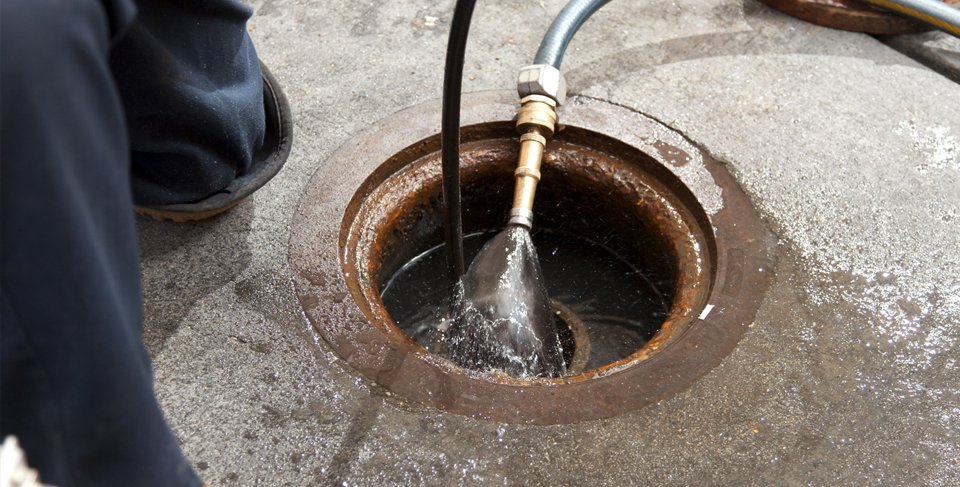
Depending on the type of blockage, professional high-pressure water jetting can clear roots, paper, grease, scale, and accumulated material from the drainage line. Once the sewer is flowing, CCTV equipment can be used to inspect the pipe and check the condition of the blocked section.
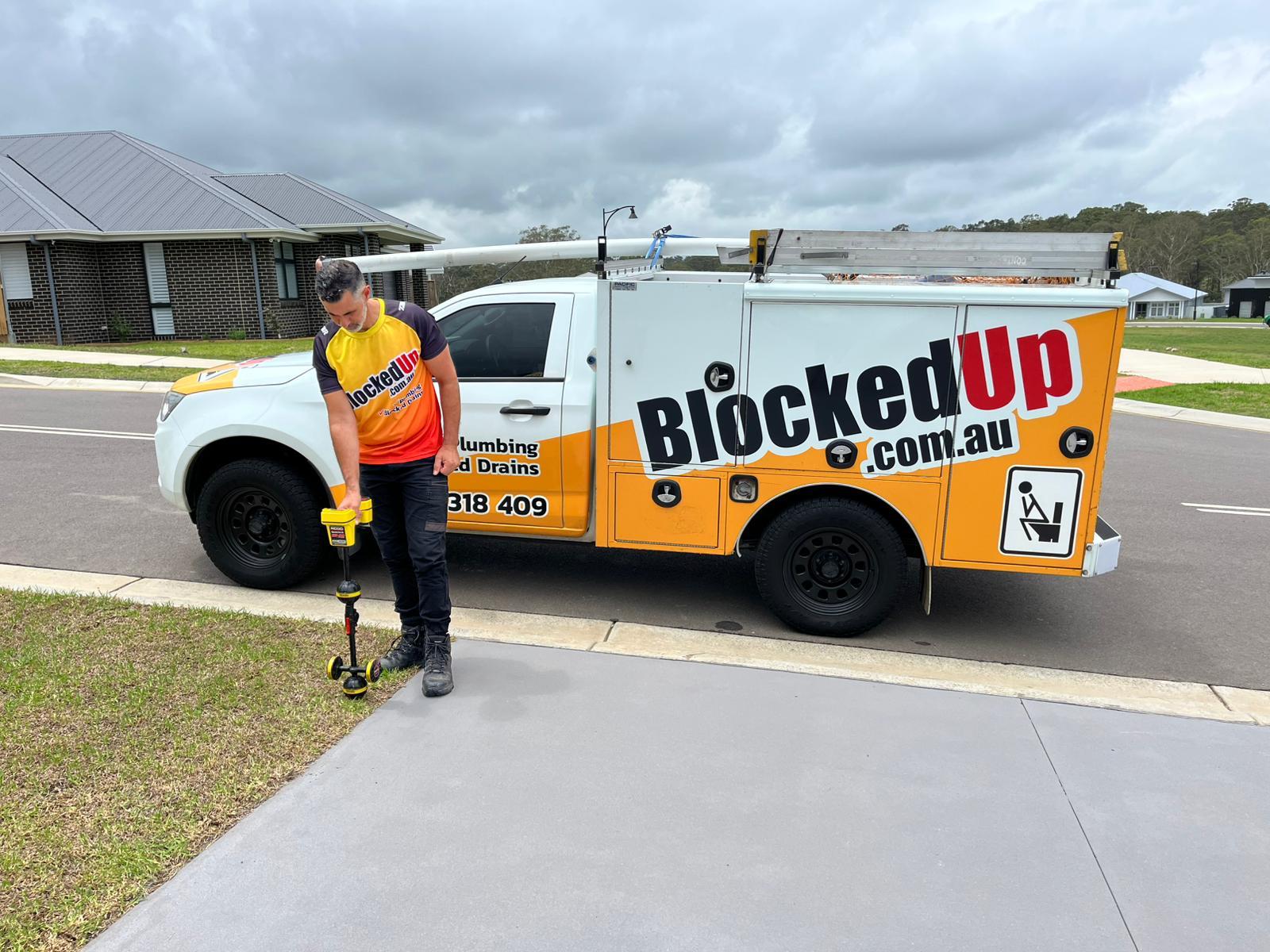
If the camera identifies an underground defect, electronic pipe location can be used to trace the line and locate the camera head from the surface.
That gives us a much better indication of where the problem is and how deep the drainage is running.
Instead of saying, "there is probably a problem somewhere under the front yard", we can make repair decisions using actual information about the drainage layout and condition of the pipe.
That approach is particularly valuable when a sewer runs under landscaping, paving, driveways or established gardens, where unnecessary excavation can become expensive very quickly.
What If the Toilet Is Gurgling but Has Not Blocked Yet?
Don't ignore it just because everything still disappears when you flush.
Gurgling usually means air is moving through the drainage system in a way it normally would not. A restriction downstream can reduce the space available for air and wastewater to move freely, so you hear pressure changes through toilets and other fixtures.
One isolated noise does not prove the main sewer is blocked, but gurgling becomes much more meaningful when combined with slower drainage, changing toilet bowl levels, bad sewer smells, or water appearing in another fixture.
Those are some of the classic signs of a blocked sewer line, and catching the problem while the pipe is still partially flowing is generally much better than waiting for sewage to overflow through the lowest drain.
When Should You Stop Using the Toilet and Call a Plumber?
If the toilet keeps blocking after it has already been cleared, we recommend investigating rather than continuing to plunge it every time.
You should also stop using affected fixtures if wastewater is backing up, the toilet is close to overflowing, several drains are affected at once, sewage is appearing through a shower or floor waste, or an outside overflow point is discharging wastewater.
If you have another working toilet in the house and the problem appears isolated to one fixture, there may be less urgency. If it is the only toilet in the property, or the blockage is affecting the main sewer, the job becomes much more pressing.
Blocked Up provides blocked drain services across the Central Coast as well as emergency plumbing where an overflowing toilet or sewer backup needs urgent attention.
Is the Blockage Yours or Central Coast Council's?
Most toilet blockages inside a property are dealt with by the property owner and their plumber.
Central Coast Council explains that property owners are generally responsible for sewer blockages on their premises between the sewer junction cut-in and the house.
If sewage is overflowing from a Council manhole, or there appears to be a blockage in a Council sewer main rather than the private house service, the situation is different and should be reported to Council.
You can check the current information on Central Coast Council's sewer information page.
Different Parts of the Central Coast Can Present Different Drainage Problems
There is no single "Central Coast house".
We work on everything from older homes with established gardens to newer subdivisions, apartments, strata properties and heavily used holiday accommodation.
Around established areas such as Gosford, East Gosford, Wyoming, The Entrance and parts of Wyong, the age and condition of underground drainage can be an important part of the diagnosis.
Leafy suburbs such as Erina, Terrigal, Wamberal, Kincumber and Avoca Beach can put drainage close to substantial root systems.
Around Woy Woy, Umina Beach, Ettalong Beach and the Peninsula, property layouts and previous alterations can also mean the route of an older sewer is not always obvious from above ground.
We also attend properties around Bateau Bay, Berkeley Vale, Chittaway Bay, Tuggerah, Toukley, Long Jetty, Copacabana, Macmasters Beach and surrounding areas.
Whatever the suburb, the same principle applies: if a toilet keeps blocking, find the reason rather than assuming every blockage is just another load of toilet paper.
How to Reduce the Chance of Your Toilet Blocking Again
Good habits help, but prevention starts with understanding what caused the previous blockage.
Keep wipes, sanitary products, paper towels, tissues, cotton products and other rubbish out of the toilet. Use reasonable amounts of toilet paper and give the toilet a full flush when required rather than relying on a half flush when it is not suitable for the load.
More importantly, do not mistake repeated clearing for prevention.
If roots are growing through a damaged joint or waste keeps catching on a displaced section of pipe, changing toilet paper brands will not solve it.
Once a recurring blockage has been properly diagnosed, a plumber can explain whether the line simply needed a thorough clean, whether periodic maintenance makes sense, or whether there is a structural drainage problem worth repairing.
Toilet Keeps Blocking? Find the Cause, Not Just the Blockage
If your toilet has blocked more than once, it is usually more valuable to find out why than to repeatedly clear the same symptom.
Blocked Up Plumbing can inspect blocked toilets and sewer drainage across the Central Coast using professional drain-clearing and diagnostic equipment where required.
From Terrigal and Erina through Gosford, Woy Woy, Umina Beach, Bateau Bay, The Entrance, Tuggerah, Wyong and surrounding suburbs, our local plumbers can assess the toilet, clear the blockage and investigate the drainage if there are signs of a deeper problem.
Contact Blocked Up Plumbing to arrange a plumber.
Frequently Asked Questions
Why does my toilet keep blocking even after I plunge it?
Plunging can move a local obstruction or temporarily restore flow through a partially blocked pipe without removing the underlying cause. If the toilet blocks again, there may be material further down the drain, tree-root intrusion, damaged pipework or another restriction in the sewer that needs to be investigated.
How do I know if the toilet or the main sewer is blocked?
If only one toilet is affected and every other fixture drains normally, the blockage may be local to that toilet. If several drains slow, the toilet gurgles when another fixture is used, water rises in the shower when you flush, or an outside gully overflows, the problem is more likely in a shared drain or the main house sewer.
Can tree roots make a toilet keep blocking?
Yes. Roots can enter underground sewer pipes through cracks, joints and other defects. Once inside, they catch toilet paper and waste and progressively restrict the pipe. Clearing the immediate blockage may restore flow, but the toilet can block again if the root intrusion or damaged section remains.
Should I flush so-called flushable wipes?
Central Coast Council recommends flushing only human waste and toilet paper. Wet wipes do not break down like toilet paper and can contribute to sewer blockages, including products marketed as flushable.
Do you always need a CCTV camera for a blocked toilet?
No. A straightforward one-off blockage may not justify a camera inspection. CCTV becomes useful when the blockage keeps returning, multiple fixtures are affected, the cause is unclear or there are signs of tree roots or damaged underground drainage.
Is a repeatedly blocked toilet an emergency?
Not necessarily, but an overflowing toilet, sewage backup or blockage affecting the only usable toilet in a property deserves prompt attention. Stop using affected fixtures if wastewater is backing up, particularly if sewage is appearing through showers, floor drains or external overflow points.