Signs of a Blocked Sewer Line
How to Tell It's the Main Sewer, Not Just One Drain
If more than one drain in your home is slow, backing up, or gurgling, the problem is often not a single blocked pipe; it's a blocked sewer line.
Your sewer line is the main pipe that carries wastewater from your entire home to the council connection. When this line becomes obstructed, water has nowhere to go. As pressure builds, wastewater typically backs up through the lowest drains first, including showers, floor drains, toilets, and outdoor gully traps.
Understanding the early warning signs of a blocked sewer line can help you avoid serious damage, sewage overflow, and costly emergency repairs.
Below, we explain how to tell if your sewer line is blocked, what causes it, what to do immediately, and how professional Central Coast plumbers accurately diagnose and repair the issue.
Quick Answer: Is It a Blocked Sewer Line?
You are likely dealing with a blocked main sewer line if:
Multiple drains are slow or backing up at the same time
Toilets gurgle when other fixtures are used
Water appears in the shower when you flush the toilet
There is a sewage smell inside or outside the home
Your outdoor gully trap (ORG) is overflowing
If only one sink or fixture is affected, it's usually a local drain blockage.
If several fixtures are affected, the problem is almost always the main sewer line.
Blocked Sewer Line vs Blocked Drain (Quick Comparison)
Symptom | Local Drain Blockage | Sewer Line Blockage |
|---|---|---|
One sink slow | ✅ | ❌ |
Multiple drains slow | ❌ | ✅ |
Toilet gurgles | ❌ | ✅ |
Shower fills when the toilet flushes | ❌ | ✅ |
Sewage smell | Rare | Common |
Gully trap overflowing | ❌ | ✅ |
Wastewater backing up | ❌ | ✅ |
This distinction is critical, and it's where many homeowners lose time trying DIY fixes that simply won't work.
7 Clear Signs of a Blocked Sewer Line
1. Multiple Drains Are Slow or Backing Up
One of the strongest indicators of a sewer blockage is the simultaneous malfunction of multiple drains.
You might notice:
The bathroom sink is draining slowly
Shower filling with water
The laundry drain is backing up
Kitchen sink bubbling
Because all drains connect to the same sewer pipe, a blockage downstream affects the entire system.
If more than one drain is affected, it's almost never a coincidence.
2. Toilet Gurgling or Bubbling Noises
A gurgling toilet is a classic sign of a sewer line issue.
This occurs when trapped air in the sewer pipe is forced back through the system due to restricted flow. Air escapes through the toilet bowl or floor waste, creating bubbling or "glugging" sounds.
This symptom often appears before a full sewage backup, making it one of the most important early warning signs.
3. Water Appears in the Shower When You Flush the Toilet
This is a major red flag.
When the sewer line is partially blocked, flushing the toilet forces water toward the lowest available exit point — often the shower or floor waste.
If flushing causes water to rise elsewhere, the blockage is beyond the internal pipes.
This is not a fixture problem; it's a sewer issue.
4. Sewage Smells Inside or Outside the Home
Persistent sewage odours indicate gases escaping from trapped wastewater.
You may notice smells:
Around bathroom drains
In the laundry
Outside near inspection openings
Around garden areas
These odours should never be ignored. They often indicate decomposing waste sitting in the sewer pipe due to restricted flow.
5. Overflowing Gully Trap (ORG) Outside
In Australian homes, the overflow relief gully (ORG) is one of the most reliable indicators of sewer performance.
The ORG is designed to overflow outside rather than allow sewage to back up inside your home.
If you notice:
Water rising in the gully trap
Wastewater overflowing externally
Toilet paper or debris is visible
This almost always confirms a main sewer line blockage.
At this point, the system is already under significant pressure.
6. Soggy or Unusually Green Patches in the Yard
Blocked or damaged sewer lines can cause wastewater to leak underground.
Signs include:
Constantly damp soil
Greener-than-normal grass
Foul odours outdoors
Sinkholes are forming near pipe runs
These symptoms often indicate cracked or collapsed pipes, commonly caused by tree root intrusion or ageing clay pipes.
7. Wastewater Overflow (Emergency Situation)
If wastewater is entering:
Bathrooms
Laundry
Floor drains
Outdoor areas
This is considered an emergency plumbing situation.
Raw sewage poses health risks and can damage flooring, cabinetry, walls, and electrical systems. Immediate professional intervention is required.
What Causes Sewer Line Blockages?
Common causes on the Central Coast include:
Tree root intrusion into older clay or earthenware pipes
Grease and fat build-up that hardens inside pipes
Wet wipes and hygiene products (even "flushable" ones)
Pipe collapse or misalignment due to ground movement
Stormwater overload during heavy rainfall
Ageing sewer systems in older properties
Many sewer blockages recur because the underlying cause is never properly diagnosed.
What You Should Do Immediately
If you suspect a blocked sewer line:
Stop using water immediately
Avoid flushing toilets
Keep children and pets away from affected areas
Ventilate the area if smells are present
Do not use chemical drain cleaners
Contact a licensed plumber for inspection
Continuing to use water can turn a manageable blockage into a full sewage overflow.
Depending on the condition of the sewer line and the cause of the blockage, our plumbers can use high-pressure drain jetting on the Central Coast to break apart stubborn obstructions and flush loosened roots, grease, sediment and debris from the pipe.
How Professional Plumbers Diagnose Sewer Line Blockages
Proper diagnosis is essential.
At Blocked Up, professional sewer inspections typically involve:
✔ CCTV Drain Camera Inspection
A high-resolution camera is inserted into the sewer line to:
Identify the exact blockage location
Detect tree roots, breaks, or collapse
Confirm pipe condition
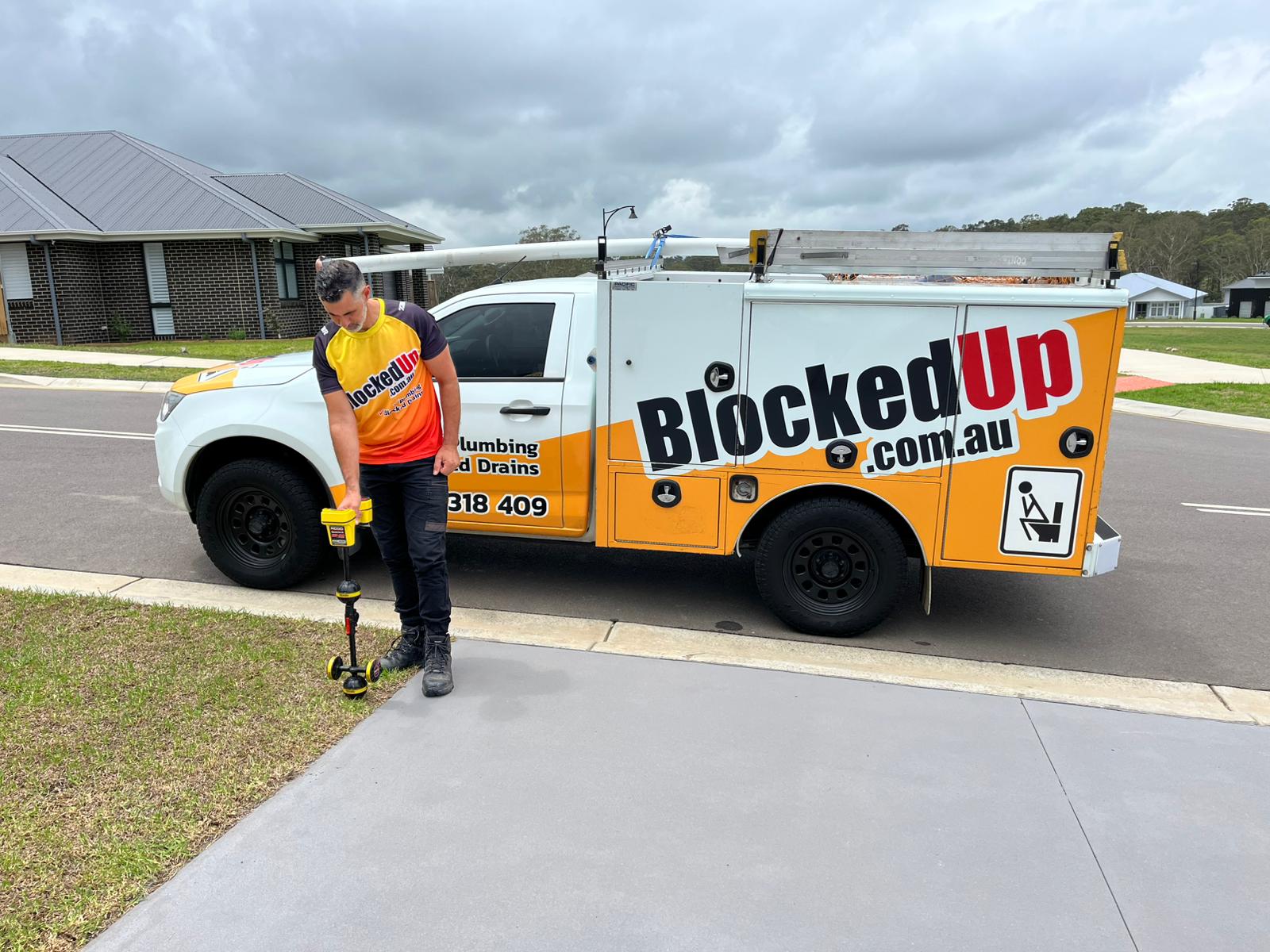
✔ Electronic Pipe Location
Used to precisely mark:
Sewer pipe path
Depth below ground
Exact fault location
This enables targeted repairs rather than unnecessary excavation.
✔ High-Pressure Water Jetting
Once diagnosed, specialised jetting equipment clears:
Roots
Grease
Debris
Sediment
Unlike DIY methods, this restores the pipe's full diameter. For your local emergency plumber on the Central Coast, visit our location pages: Macmasters Beach, Gosford and The Entrance.
Is a Blocked Sewer Line an Emergency?
Yes, especially if:
Wastewater is backing up
Toilets are unusable
Gully traps are overflowing
Multiple drains are affected
Prompt action prevents property damage, hygiene risks, and costly repairs.
Frequently Asked Questions
Does a gurgling toilet always mean a sewer blockage?
Often, yes. Especially when other fixtures are in use.
Can a blocked drain indicate a sewer problem?
Usually no. Sewer issues typically affect multiple fixtures.
What is a gully trap (ORG)?
It's an outdoor overflow point designed to safely discharge sewage outside your home rather than inside.
Can I fix a sewer blockage myself?
No. Sewer lines require licensed equipment and proper diagnosis.
How much does it cost to fix a blocked sewer?
Costs vary depending on the cause and access. A proper inspection prevents unnecessary expense.
Need Help With a Suspected Blocked Sewer Line?
If you notice multiple drains backing up, gurgling toilets, sewage odours, or gully trap overflow, it's important to act promptly.
A professional inspection can identify the exact cause and prevent major damage.
Contact us today for expert sewer line diagnosis and Central Coast plumbing support.