Why Blocked Drains Keep Coming Back on the Central Coast
Discover the secrets behind blocked drains on the Central Coast.
If you have had a drain cleared and it keeps blocking again, you are not dealing with bad luck. You are dealing with a problem that was only partially solved.
On the Central Coast, recurring blocked drains are extremely common, especially in suburbs with older homes, established gardens and ageing underground pipework. Places like Gosford, Terrigal, The Entrance, Erina, Avoca Beach, Woy Woy, Umina Beach, Bateau Bay, Toukley and Macmasters Beach all share conditions that make repeat blockages far more likely.
This guide explains why blocked drains keep coming back, what usually happens inside the pipe, and what a professional plumber looks for when the problem will not stay fixed.
Why clearing a blockage does not always fix the problem
A drain can start flowing again while still being unhealthy.
Many blockages are opened rather than entirely removed. Water passes through, the symptom disappears, and it feels fixed. However, the pipe may still be narrowed, damaged or coated internally. When that happens, it does not take much for the blockage to return, often faster than before.
This is why recurring blockages often feel unpredictable, even though the cause has been there the whole time.
The most common causes of recurring blocked drains on the Central Coast
Tree roots entering the pipe
Tree roots are the most common cause of repeat blockages locally. Roots do not break into perfect pipes. They enter through tiny weaknesses such as old joints, hairline cracks or slightly displaced sections. Once inside, they grow towards moisture and nutrients and form a web that traps toilet paper and waste.
A key reason root blockages keep returning is that cutting or blasting the roots alone does not remove the entry point. If the pipe defect remains, roots will almost always grow back through the same location.
Signs this is a root-related issue include recurring blockages every few months, gurgling sounds after flushing, or simultaneous effects on toilets and gully traps.
Grease and sludge reforming inside the pipe
Kitchen drains are another major source of recurring problems. Grease does not usually block a drain all at once. Instead, it coats the inside of the pipe and slowly narrows it. Food particles and debris stick to the grease, building layer by layer.
If a line is only partially cleaned, the grease layer remains and begins to catch debris again almost immediately. This is why some kitchen drains block repeatedly despite being cleared multiple times.
Common signs include slow drainage that gradually worsens, recurring blockages after heavy cooking periods, and brief improvement when hot water is used before the problem returns.
Where grease, sludge, sediment or root material remains inside the pipe, professional high-pressure drain jetting can provide a more thorough clean than simply creating an opening through the blockage.
Misaligned joints create an internal lip
In older pipework, joints often shift slightly over time. Even a slight misalignment can create a lip inside the pipe that catches waste and paper.
This type of fault often causes blockages at the exact location. Clearing restores flow, but the internal snag point remains, so the drain blocks again.
This issue is almost impossible to confirm without seeing inside the pipe.
Low sections that hold waste and sediment
A low section in a pipe is an area where water and solids sit instead of flowing away. Even if the blockage downstream is cleared, this low section continues to collect debris.
Over time, the build-up reaches a point where the drain slows, smells develop, and a complete blockage eventually forms again.
Recurring blockages that appear on a predictable schedule, such as every few weeks or months, are often linked to this type of issue.
Stormwater systems are overwhelmed after heavy rain
Stormwater blockages are often mistaken for sewer problems. Leaf litter, garden debris and silt can build up in stormwater lines and go unnoticed until heavy rain pushes everything at once.
When stormwater cannot drain properly, it may overflow into yards, downpipes or pits, making the problem seem sudden and random.
If drainage problems only appear during or after rain, stormwater should be strongly suspected.
Treating the wrong system
One of the most common professional mistakes is treating a stormwater issue as a sewer issue, or vice versa. The symptoms can look similar, but the fix is entirely different.
As a general guide, issues triggered by rainfall usually point to stormwater, while issues triggered by using toilets, showers or sinks usually point to sewer drainage.
What a professional plumber checks when drains keep blocking
When a blockage is recurring, the approach changes. Instead of focusing only on clearing, a professional Central Coast plumber looks for patterns and causes.
First, the behaviour of the blockage is assessed. This includes which fixtures are affected, how often it returns, and whether weather plays a role. This helps determine whether the issue is localised or part of a mainline problem.
Next, the correct drainage system is confirmed. Misidentifying the system leads to repeated failures.
For recurring issues, internal inspection becomes critical. Seeing inside the pipe allows the plumber to identify roots, cracks, misalignments, collapses or heavy internal build-up. Once the cause is visible, the repair can be targeted instead of guessed.
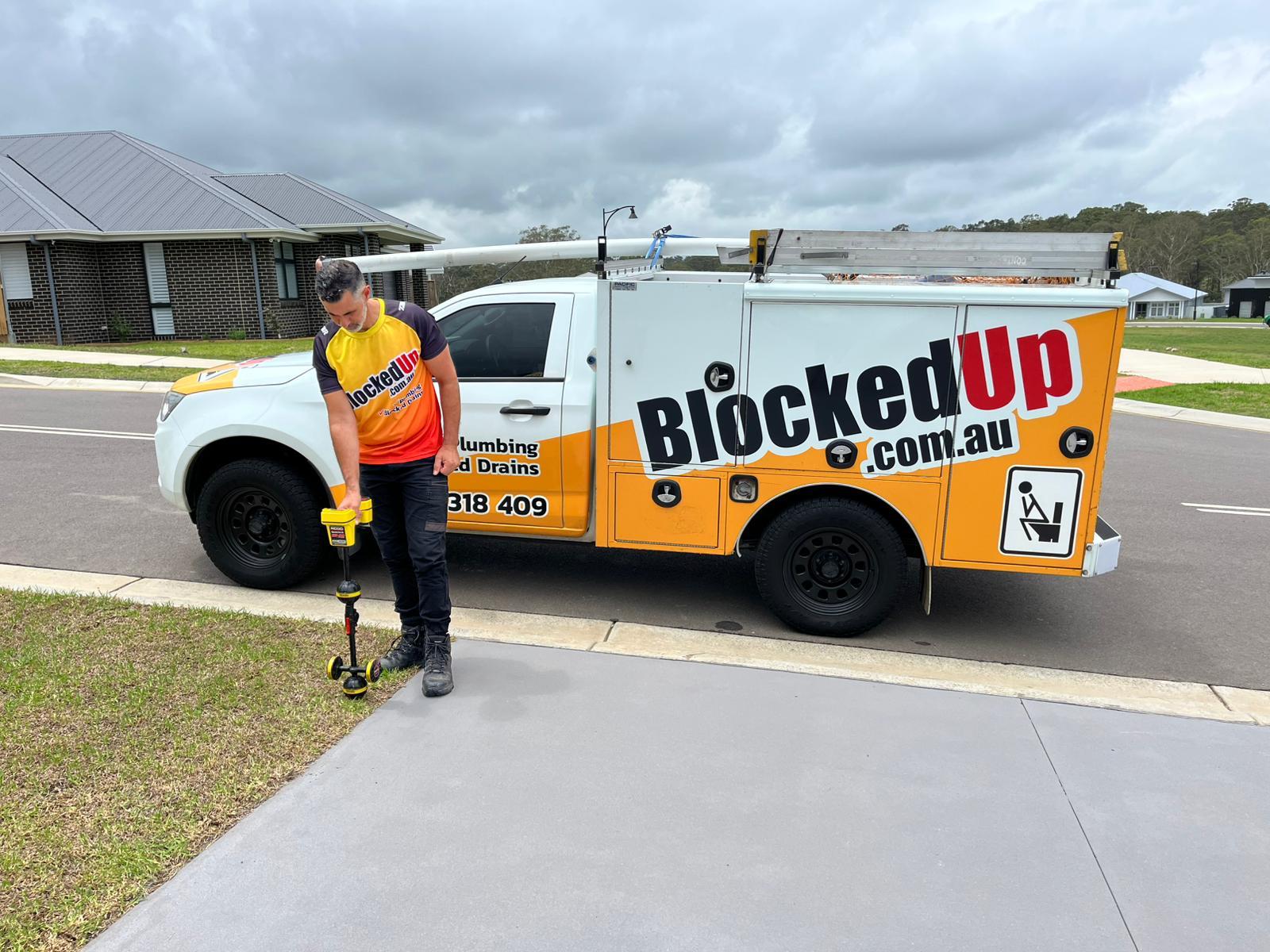
Finally, the precise location of the problem helps avoid unnecessary digging and allows repairs to focus only on the damaged section.
When recurring blocked drains become urgent
A recurring blockage becomes urgent when wastewater starts backing up, overflowing or entering the home. Sewage exposure is a health risk and can cause property damage very quickly.
Urgent attention is needed if toilets overflow or back up into showers or floor wastes, sewer smells are present inside the home, multiple fixtures are blocked at the same time, or wastewater is pooling outside near the building.
Delaying action in these situations often leads to more extensive damage and higher repair costs.
Central Coast homes most at risk of repeat blockages
Recurring drain problems are especially common in older homes with ageing pipework, properties with established trees and gardens, homes built on sloped blocks, and areas with heavy leaf litter and stormwater movement.
Suburbs across the Central Coast share these characteristics, which is why repeat blockages are such a frequent issue locally.
Prevention tips that actually make a difference
If you have already had a blockage return once, prevention becomes about addressing the cause, not just being careful.
If tree roots have been involved before, assume they will return unless the entry point is dealt with. Simply cutting roots is rarely a permanent solution.
Treat grease as a solid, not a liquid. If it coats a pan, it will coat a pipe. Scraping plates and pans before washing makes a real difference over time.
Stormwater systems benefit from seasonal checks, especially after heavy leaf drop or storms. Many failures occur because debris has been quietly building for months.
Avoid repeating chemical drain cleaners on the same blockage. They will not fix structural issues and can be harsh on older pipes.
Most importantly, if a drain keeps blocking, stop treating it as a one-off problem. At that point, diagnosis is almost always cheaper than repeated callouts.
Frequently asked questions about recurring blocked drains
Why do blocked drains keep coming back after being cleared?
Because the underlying cause remains, clearing restores flow, but issues such as roots, grease buildup, or pipe damage continue to create restrictions.
Is jet blasting enough for recurring blocked drains?
Sometimes, but not always. If the pipe is damaged, misaligned or allowing root entry, jet blasting alone is usually temporary.
When should a drain be inspected internally?
If blockages recur, affect multiple fixtures, return quickly after clearing, or worsen after rain, internal inspection is usually the next logical step.
Why are blockages worse after heavy rain?
Rain can overload stormwater systems, move debris, and expose partially blocked sections that otherwise go unnoticed.
How can I prevent blocked drains from recurring?
By identifying and fixing the cause rather than repeatedly clearing the symptom. This often means inspection, targeted repair and better maintenance of the affected system.
Need help with a blocked drain that keeps coming back?
If your drains keep blocking, the fastest way to a lasting solution is proper diagnosis followed by a targeted fix. Recurring problems rarely resolve themselves, but they can be fixed when the cause is identified and appropriately addressed.
If you are on the Central Coast and dealing with repeated drainage issues, a professional assessment can save you time, stress and repeated callout costs.