Should You Get a Drain Inspection Before Buying a Home on the Central Coast?
Buying a house is one of the few times people will spend hundreds of thousands, or considerably more, after seeing the property for less than an hour.
You organise the building and pest report, check the roof, look for cracking and moisture, test a few taps and flush the toilet. Everything seems to work.
What you usually have not seen is the drainage running underneath the property.
For some Central Coast homes, that does not matter. For others, a pre-purchase drain inspection can uncover a problem that is far more useful to know about before you own the house than after settlement.
The important question is not whether every buyer needs a drain camera inspection. They don't. The better question is whether the particular property has enough drainage risk to make looking underground worthwhile.
Your Building Inspection and Your Drain Inspection Do Different Jobs
A good building and pest inspection should be a foundation of your due diligence. A drain inspection does not replace it.
It answers a different question.
A building inspector can assess accessible areas of the property, including signs of moisture, surface drainage and stormwater run-off. But NSW Government guidance makes an important distinction: a standard building inspector would not normally check plumbing, drainage and gasfitting in detail.
You can read the official NSW Government guidance on pre-purchase inspection reports.
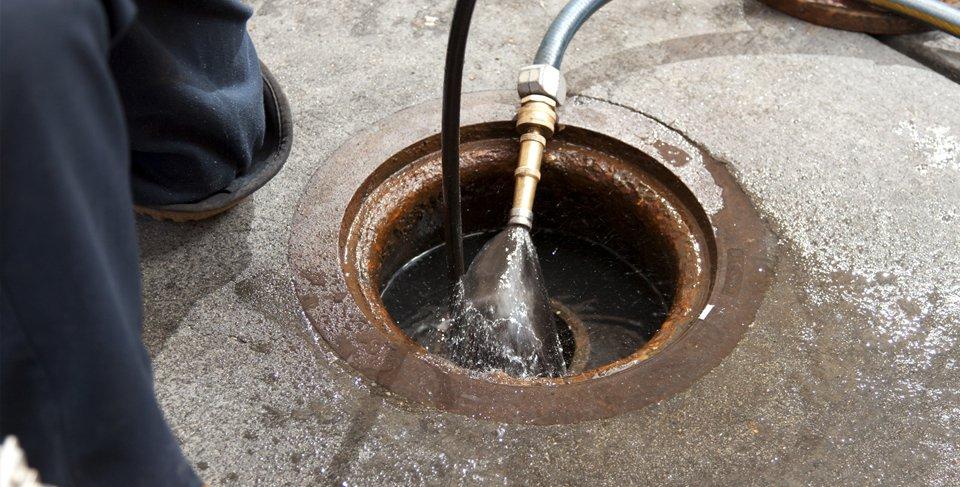
A CCTV drain inspection goes inside the underground pipe.
That means we can look for things an open-home inspection cannot show you, such as tree-root intrusion, displaced joints, cracking, damaged pipe sections, significant obstructions, and areas where the drainage condition deserves further investigation.
It is not another version of your building inspection. It fills one of its blind spots.
When Would I Seriously Consider a Drain Inspection?
We would not tell a buyer to book one simply because a house reached a particular birthday.
Property history matters more than an arbitrary year.
An established home in Gosford, East Gosford, Wyoming, The Entrance or Wyong with mature trees and older drainage deserves more attention than a property where the sewer has recently been professionally replaced and documented.
Likewise, a renovated house is not automatically low risk. A beautiful new kitchen and bathroom tell you very little about the condition of the sewer beneath the garden.
The inspection becomes particularly useful when you notice clues such as slow drainage, gurgling toilets, sewer smells, a history of blockages, mature trees close to the likely sewer route, old drainage visible around the property, unexplained excavation, extensive paving over drainage routes or comments about drainage in the building report.
If you are already seeing symptoms, our guide to the signs of a blocked sewer line explains what deserves closer attention.
The Central Coast Adds Some Particular Risks
There is a huge variety of housing across the Coast.
We work around older established properties, sloping blocks, leafy residential areas, coastal homes, renovated cottages, investment properties and newer estates. They do not all have the same drainage risks.
Tree roots are one obvious local consideration. Central Coast Council's own sewer-network reporting regularly identifies roots and ageing vitreous-clay infrastructure as major causes of sewer faults in the public network. That does not tell us what is happening in a particular house drain, but it demonstrates that roots and older pipe materials are genuine local drainage issues.
Properties around areas such as Gosford, The Entrance, Terrigal, Erina, Wamberal, Kincumber, Avoca Beach and established sections of the Peninsula can have mature landscaping close to underground drainage.
Coastal and stormwater conditions create a different set of questions. Around suburbs such as Avoca, Macmasters Beach, Wamberal and other coastal parts of the region, drainage, sand, surface water and stormwater management may deserve as much attention as the sewer itself.
If you are unsure which system you are looking at, read Sewer Drain vs Stormwater Drain: How to Tell Which One Is Blocked.
A Toilet That Flushes at the Open Home Doesn't Tell You Much About the Sewer
This is probably the most important practical point for buyers.
A partially restricted sewer can still work.
Water and waste may pass through a pipe with root intrusion or a developing obstruction for months before the restriction becomes severe enough to create an obvious blockage. A quick toilet flush during an inspection is not a stress test of the underground drainage.
We have seen the difference between the symptom and the actual fault in local work.
One Blocked Up customer originally had what appeared to be a blocked toilet. Inspection showed that the actual problem was a blocked sewer requiring sewer repair. Another customer had tree roots cleared before the sewer was camera-checked beyond the immediate problem area.
That is why we prefer evidence over assumptions.
If a drain has a history of repeated blockages, there is value in understanding why blocked drains keep coming back, rather than accepting that an occasional blockage is simply part of owning the property. Blocked Up's public customer feedback documents these same diagnostic patterns in local work.
What Should a Pre-Purchase CCTV Drain Inspection Actually Tell You?
The useful outcome is not simply a plumber saying, “the camera went through.”
You want to understand the condition of the line and whether what you find changes your buying decision.
A CCTV video pipe inspection can allow the drainage to be viewed internally where access and pipe conditions permit.
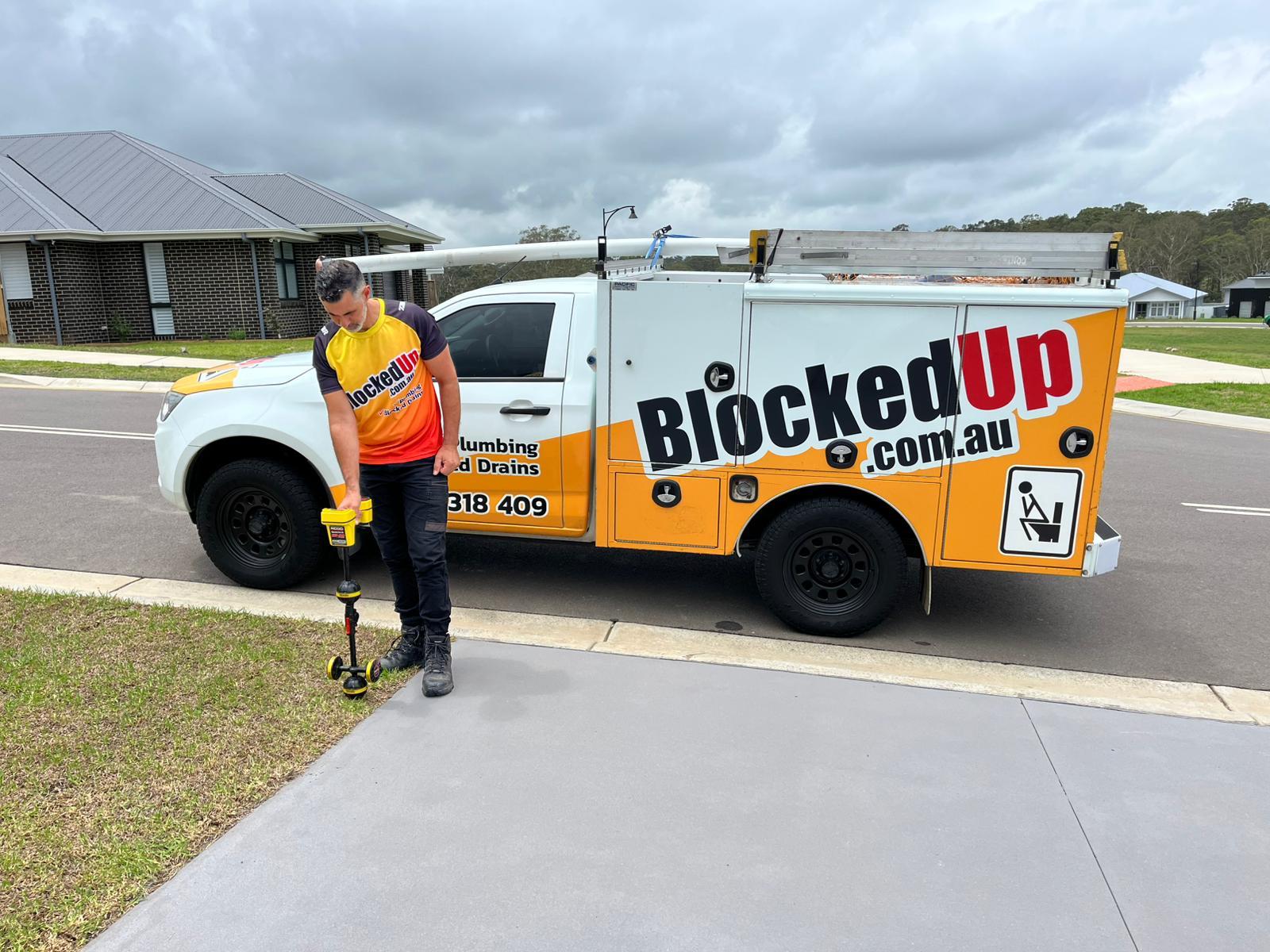
If something significant appears, electronic pipe location can help determine where the relevant section of pipe runs beneath the property and locate the camera head from the surface.
That becomes much more useful when the defect is underneath a driveway, paving, an extension, expensive landscaping or another difficult-access area.
For a buyer, location can matter almost as much as the defect itself.
A repair in an accessible garden bed is a different proposition from the same defect buried below finished concrete.
If the Camera Finds Something, It Does Not Automatically Mean “Don't Buy”
This is where a useful inspection differs from a scare report.
Suppose the camera finds some root intrusion.
The next questions are whether the roots are minor or substantial, what allowed them to enter, whether the pipe itself appears structurally compromised and whether the problem is likely to need maintenance or permanent repair.
Likewise, old clay pipe is not automatically a failed pipe.
Some older drainage continues to function well. Other lines have displaced joints, cracks or repeated root entry that changes the risk considerably.
The result generally leaves a buyer with one of several options.
If the drainage appears serviceable, keep the inspection information in your property records and continue with your purchase decision.
If there is a manageable maintenance issue, you may still be comfortable buying the property while budgeting for drainage work later.
If there is a defined defect, you can obtain more information or a repair scope before committing.
If there is major damage, difficult access, or uncertainty about the extent of the problem, further investigation becomes valuable before the property becomes yours.
The purpose of the inspection is not to find a reason to walk away. It is to replace an unknown with information.
What About Stormwater?
For some Central Coast properties, I would be just as interested in stormwater as sewer drainage.
Look closely at sloping blocks, properties below neighbouring land, houses with obvious surface-water management, low sections of the yard, significant paving, subfloor moisture or evidence that stormwater has previously moved through the property.
Central Coast Council notes that the region's climate and topography can make private-property stormwater issues common and that natural overland flow can cross private land.
That does not necessarily mean a blocked pipe.
It may involve the property layout, natural overland flow, pits, downpipes, private stormwater lines, or drainage easements.
A buyer who sees water staining, damp subfloor areas or unusual drainage infrastructure should understand what they are buying rather than assuming Council will solve it later.
When Might I Decide a Drain Inspection Is Lower Priority?
There are situations where the decision value is lower.
For example, you may be looking at a relatively recent home with documented drainage work, modern pipework, straightforward access, no significant trees near the drainage route, no drainage symptoms and nothing concerning raised by your other inspections.
Even then, that is a risk decision, not a guarantee.
The reverse is also important. Don't assume a freshly renovated house has new drains. Ask what was actually replaced.
Bathrooms, tiles and tapware are visible in real-estate photos. Underground sewer pipe generally isn't.
When Should You Arrange the Inspection?
Ideally, arrange specialist inspections while you can still use the information in your buying decision.
NSW Government guidance recommends obtaining building inspection information as early as possible in negotiations and explains that inspections may also occur during a cooling-off period. Auction purchases have different implications because the usual cooling-off period does not apply.
If timing matters, speak with your solicitor or conveyancer about your particular contract rather than relying on a plumber for legal advice.
The Best Outcome May Be Finding Nothing Serious
A drain inspection is not successful only when it discovers a disaster.
Sometimes the best result is seeing a sewer that is flowing properly with no significant defect identified in the inspected section.
You now have information you did not have before.
And if something is found, you find it while you still have options, rather than discovering it when a toilet backs up two weeks after moving day.
Blocked Up Plumbing provides blocked drain and drainage services across the Central Coast, including CCTV inspection and pipe location where required.
If you are considering a home in Terrigal, Erina, Gosford, Woy Woy, Umina Beach, Bateau Bay, The Entrance, Tuggerah, Wyong, Kincumber, Wamberal, Avoca Beach or surrounding areas and want to understand the underground drainage before buying, contact Blocked Up Plumbing to discuss the property and whether a drain inspection would actually add value to your due diligence.